

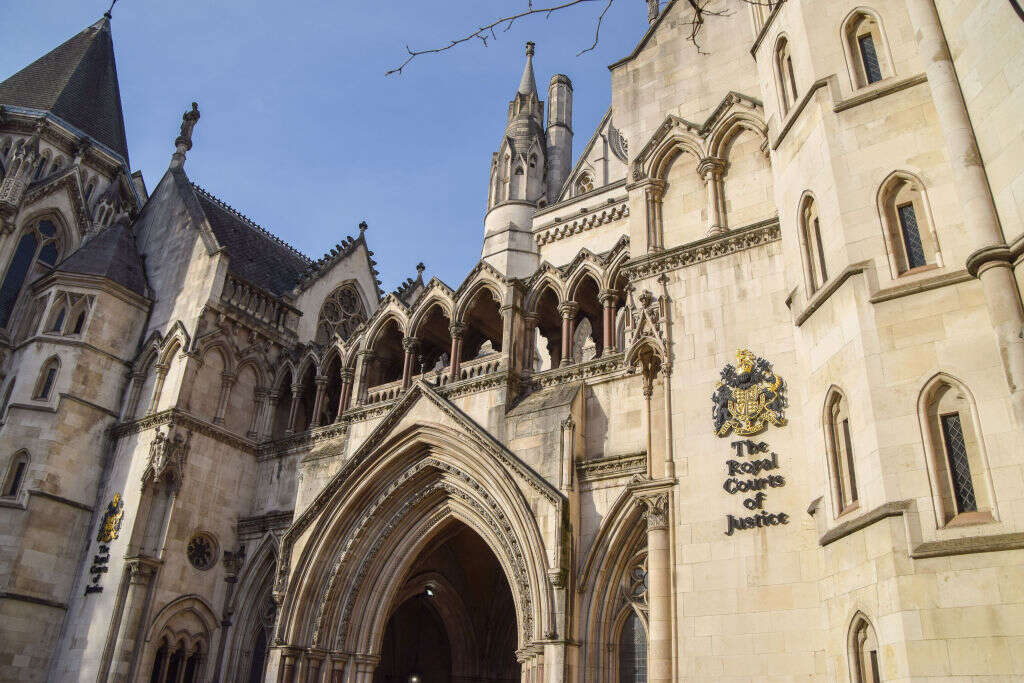
A famous man has lost his bid for a High Court injunction against two media organisations to prevent the publication of allegations against him, but cannot yet be named.
The man brought legal action against Independent Television News (ITN), which produces news programmes for ITV, Channel 4, Good Morning Britain and Channel 5, and Guardian News and Media (GNM), publisher of The Guardian.
The man – referred to as PPT – sought to argue during a two-day trial in late October that publication of news articles and a documentary about his alleged “abuse of power and status” to contact young women and try to engage in “inappropriate and exploitative sexual activities” breached articles 2, 3 and 8 of the European Convention on Human Rights.
This is the first time that Article 2 and Article 3 rights have been invoked to seek an injunction preventing publication of a news story or documentary.
Article 2 protects the right to life and Article 3 relates to protection from torture or degrading treatment. The man also asserts his Article 8 right to privacy (the normal means by which pre-publication injunctions are sought).
In a 52-page judgment, Mr Justice Nicklin accepted that publication of the allegations would substantially increase the risk of the man committing suicide. But he said that under the law, the State’s responsibility did not extend to controlling all external factors that impact the man’s mental health.
On 18 May 2026, The Guardian and ITN each sent the claimant a detailed invitation to comment. The two letters together contained 278 numbered points and asked for a response within a short period. The claimant was admitted voluntarily to a psychiatric hospital later that day.
The court heard that in July 2026 the man attempted to take his own life.
Journalists from ITN began investigating claims against the man in 2022 and have been conducting the investigation jointly with The Guardian since April 2023.
Journalists are said to have spoken to more than 100 people, including more than 30 sources said to have first-hand accounts. The sources included not only those making allegations but friends, colleagues, former partners, relatives and others – none of whom were paid or offered other inducements.
It is not substantially disputed that PPT has a serious psychiatric vulnerability or that publication would materially increase his risk of suicide.
Mr Justice Nicklin said: “The claimant anticipates that publication would result in public humiliation, professional and personal loss, damage to or loss of his relationship with his son, and the destruction of the life which he presently knows.
“The material also identifies the subject matter of the allegations as capable of triggering in the claimant a deep-rooted sense of shame associated with childhood trauma; in his case, that reaction does not depend upon whether the allegations are true.
“His psychiatric condition contributes to a catastrophising and hopeless assessment of those anticipated consequences and to his present inability to envisage a tolerable future following publication…
“The proposed publications are not the sole cause of the claimant’s psychiatric condition or suicidality. Nor are they the only source of his present distress. The litigation, uncertainty about its outcome and difficulties affecting an important personal relationship have also contributed to his deterioration. Nevertheless, the prospect of publication is a specific and powerful anticipated trigger.
“An injunction would remove that particular trigger for so long as the restraint remained effective. It would not treat the underlying psychiatric condition, remove the claimant’s elevated baseline risk or prevent deterioration arising from other significant stressors.”
Explaining his decision to reject the Article 2 (right to life) claim, the judge said: “The psychiatric services have assumed responsibility for protecting the claimant against suicide arising from his mental disorder. It does not follow from that responsibility, or from the court’s knowledge of the likely consequences of publication, that Article 2 requires this court to prevent every external event which may cause an acute escalation of that risk.”
Rejecting the Article 3 claim (protection from torture), he said: “I accept that publication would cause the claimant acute and potentially prolonged mental suffering. His vulnerability and the likely psychiatric consequences are matters of great seriousness.
“The proposed journalism does not, however, constitute ‘treatment’ by the State for the purposes of Article 3.”
Publication safer while claimant in ‘supported inpatient environment’
The judge concluded that it might be best for the allegations to be published whilst the man is in psychiatric care rather than at some unspecified time in the future.
He said: “An injunction would remove the publication-related trigger for so long as it remained in force. It would thereby operate upon the asserted cause of the acute escalation in risk rather than treating or containing the risk itself. That does not make the injunction irrelevant or ineffective: preventing a trigger may in an appropriate case be a powerful means of protecting life. But it is materially different from the measures for which the psychiatric services have assumed responsibility.
“The injunction would not treat the claimant’s underlying psychiatric condition or eliminate his elevated baseline risk. The evidence does not identify a point at which publication would become safe merely through the passage of time. The relief sought would therefore be of uncertain and potentially indefinite duration…
“If publication is to occur, it would be significantly safer while the claimant remains within the supported inpatient environment than after discharge into the community.”
Rejecting the man’s Article 8 (privacy) argument, the judge said this was outweighed by the Article 10 right to freedom of expression exercised by ITN, The Guardian and their sources.
The judge said: “The proposed publications concern serious allegations about the conduct of a prominent person and the alleged use of status, influence and access in dealings with women and girls. The subject matter includes alleged abuse of power, sexual misconduct and inappropriate conduct towards younger or vulnerable persons. Those are matters capable of making a significant contribution to public debate.
Mr Justice Nicklin said: “The court did not determine whether the allegations, or any of them, were true, and the dismissal of the claim does not amount to approval of any publication the defendants may decide to make.”
He added that the man will remain anonymous to allow any appeal bids to be lodged.
Sara Mansoori KC, for the unnamed man, previously said he denies the allegations of wrongdoing and that publication “would have a potentially fatal impact”.
She told the court: “The only reason they would not be fatal is because the claimant would be locked up and prevented from his desire to end his life.”
The barrister also said the claimant “has no intention of returning to public life”.
Gavin Millar KC, for ITN and GNM, said the case risks “dragging judges into assessing the causes of suicidal ideation, which are for professionals and not for a judge”.
He added: “The obligation falls on the hospital to keep him safe, and that’s that.”
He later said: “Plainly, the proposed publication would make a valuable contribution to a debate of public importance, about men using their power to be able to misconduct themselves against women in that area of society.”
Media lawyer Alex Wilson, a partner at RPC, said: “This is a very strong judgment and an important victory for press freedom. The judge recognised that there was a real and immediate risk to PPT’s life through suicide, but that this was a risk that could be managed and reduced through treatment.
“The court found that the responsibility for PPT’s immediate safety rested with the psychiatric hospital and mental health services. There was no legal basis for placing an obligation under Article 2 on the media in these circumstances. The court also considered the balance between PPT and his family’s privacy rights under Article 8 and the media’s (and the sources’) freedom of expression rights under Article 10 and came down in favour of Article 10, recognising the public interest value of the journalism.
“This is obviously a sensible and, in my view, correct decision. That said, given how much is at stake and the quite exceptional nature of the case, I would not be surprised if it ended up being considered further by a higher appeal court and indeed the injunction remains in force to give him the opportunity to appeal before he is named.”
Global media freedom campaign group Reporters Without Borders said in a statement: “The ability of journalists to expose abuses of power, and of those affected to have their voices heard, is fundamental to our democracy. While the risks of harm in this case of course must be taken seriously, it is important that responsible journalism in the public interest is allowed to proceed.
“Dangerous precedents can have impacts far beyond the cases that set them, and neither wealth nor access to the best legal teams should ever shield anyone from legitimate public scrutiny. Survivors, and the journalists they trust to share their stories, must be able to speak without fear that powerful individuals can prevent them from being heard.”
Email pged@pressgazette.co.uk to point out mistakes, provide story tips or send in a letter for publication on our "Letters Page" blog
